

The title may not have changed, but the responsibilities have shifted. Pastor. It is a familiar title – one deeply rooted in Scripture and the life of the church. However, the expectations attached to this title have changed substantially. Today’s pastors are asked to carry responsibilities that extend far beyond preaching, teaching, visitation, and pastoral care. A pastor may be expected to be a preacher, counselor, fundraiser, administrator, communicator, community leader, conflict mediator, strategic planner, staff supervisor, social media presence, technology advocate, and financial steward. You can probably add even more job functions to the title. All of these roles are to be completed while providing spiritual leadership and caring for people in the midst of some of the most significant moments of their lives.

The challenge is not simply that pastors have more work to do. The deeper challenge is that the nature of pastoral leadership itself is changing. Our response requires more than working harder.
The expanding job description
For generations, many congregations understood the pastor primarily as the person who preached on Sunday, visited the sick, officiated weddings and funerals, taught Bible studies, and provided spiritual guidance. These responsibilities remain essential, but they now exist alongside an increasingly complex organizational ecosystem.
Pastors lead congregations through financial uncertainty, changing demographics, declining participation, staffing challenges, building decisions, technology changes, community partnerships, cultural divisions, and future sustainability. Pastors are expected to communicate across multiple platforms and generations. They must understand enough about budgets and governance to provide effective oversight. They may find themselves navigating difficult personnel situations one day and leading a capital campaign the next.
Ever wonder how hard it would be for your church to get a loan? Do you think the process will be difficult? Or that your church might not be eligible for a loan? If you have an existing loan at a bank, but don’t like that the interest rate on the loan keeps increasing, maybe it is time to call our office to discuss your options. The process is as easy as picking up the phone.The Michigan Area Loan Fund offers mortgage loans and smaller unsecured loans to churches in the Michigan Conference and Michigan churches with historical ties to the denomination.We received positive feedback from a church that recently worked with the Michigan Area Loan Fund to refinance an existing bank loan. The finance chair said, “the process was easy and it was a pleasure to work with our knowledgeable staff on the refinance.” This church lowered the interest rate on their existing loan and lowered their monthly payments, ultimately helping to meet their annual budget.Learn More |
I am good at noting my flaws. When I get done preaching, I can list all the things I did not say well and the points I left out. This is particularly acute for pastors. Pastors’ jobs involve multiple different tasks: public speaking, fiscal management, organizational administration, staff supervision. No matter how well we do at any of these, chances are there is at least one job function we fall short.
In August, the United Methodist Foundation of Michigan partnered with Lake Louise Christian Community’s Clergy Family Camp to offer a Gallup Strengths seminar. Gallup Strengths involves taking a test that measures thirty-four different areas. Those who participated learned what our top five strengths are, and how we can lead and live out of our strengths.
The point of Gallup Strengths is that none of us can do everything perfectly. It recognizes that we all have strengths and that it is easier to work out of our strengths than our weaknesses.
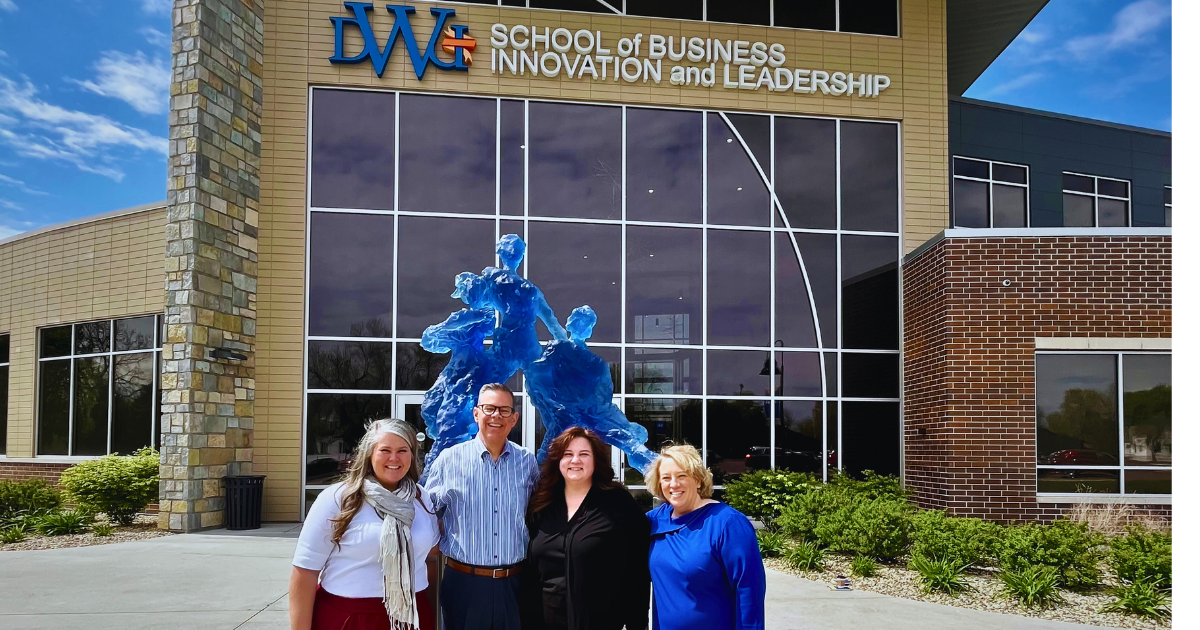
Pictured at Dakota Wesley University Graduation: Rev. Sarah Alexander, Rev. David Bell, Rev. Susie Hierholzer and Rev. Julie Elmore. Not pictured is Rev. Joel Walther
Rev. Dr. David S. Bell, President and Executive Director of the Foundation, celebrated at the Dakota Wesleyan University with our Michigan pastors who have recently graduated with a Master of Business Administration degrees with a concentration in practical church leadership.
Beginning in 2022, the Foundation has invited pastors to participate in this program and offered major grants and financial assistance.
Tailored for working ministry professionals, these graduate courses aim to enhance skills in:
Throughout the course, participants benefit from the support of peers, professional coaches, and coursework that significantly enhances their ministry impact.
Congratulations on your graduation!